Dokkan Babaji
Cow Ghee
Cow Ghee
Couldn't load pickup availability
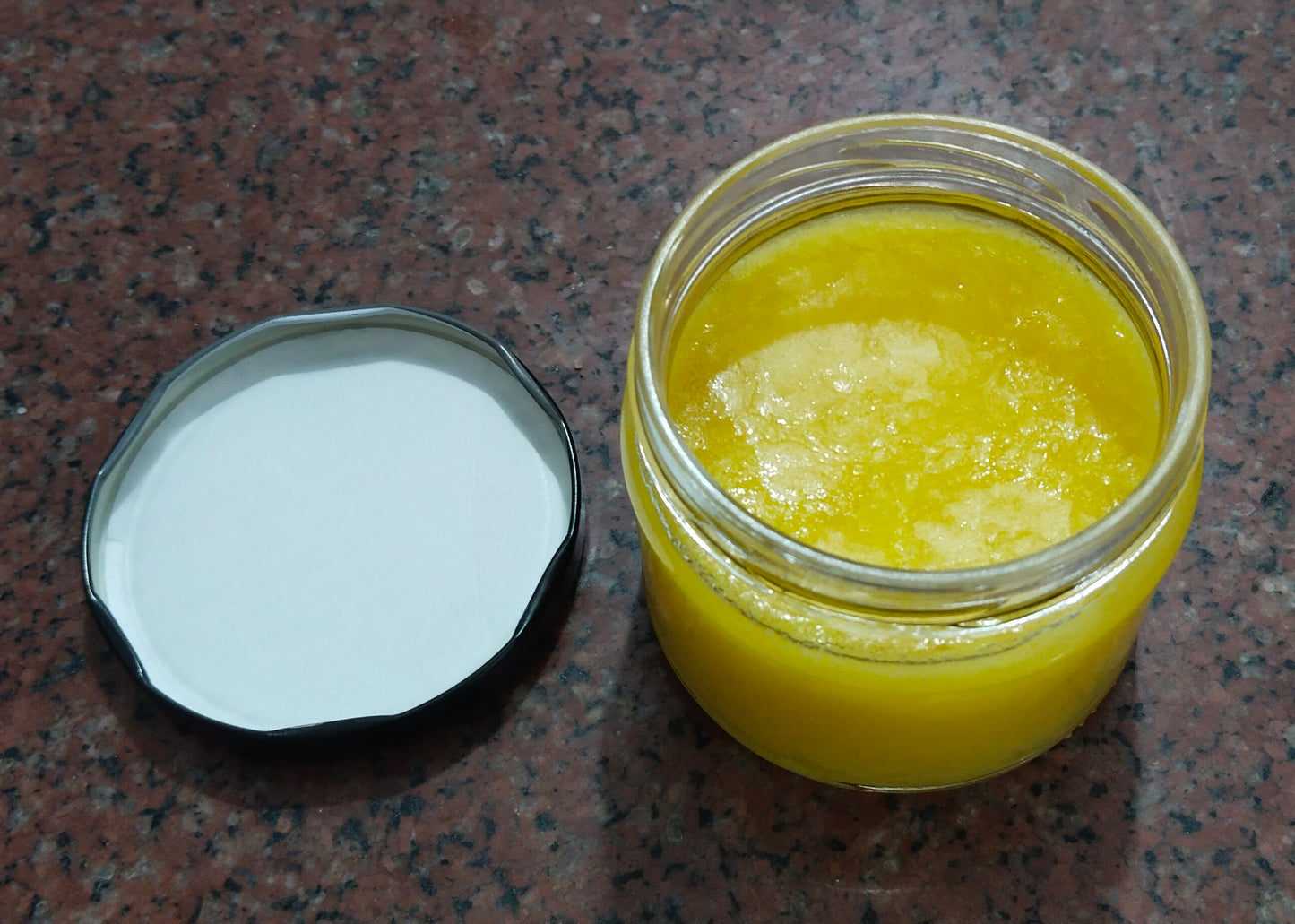
This is medicinal-grade pure homemade cow ghee — slow-cooked from a local farmer's cow butter, in small batches.
The butter comes from a farmer I've worked with for years — the same source I trust for my own home and the Ayurvedic treatments I do for my clients.
Nothing is rushed. Nothing is added. What you get is rich, golden, fragrant ghee — made to a standard rarely met in the age of industrial food.
There was a time when every family made its own ghee — from real milk, real butter, cooked slowly at home. That time is mostly gone — this is a return to it.
Cook with it. Take it by the spoon as a daily rasayana. Use it for the classical Ayurvedic therapy. The same jar serves all three — which is what medicinal-grade ghee was always meant to do.
Share
Ingredients
Ingredients
100 %Pure Cow Ghee
How to use
How to use
For cooking — use it anywhere you'd use butter or oil. Its high smoke point (around 250°C) means it handles high heat without burning, and it adds a rich, nutty depth to anything you cook in it.
By the spoon — a teaspoon in the morning on an empty stomach, or stirred into warm milk before bed. One of the oldest and simplest daily practices there is.
As a carrier — mix it with herbs, spices, or honey. Ghee helps the body absorb them more deeply.
A note on ghee and honey: never mix the two in equal quantities. Classical Ayurveda is specific about this — ghee and honey in equal parts is considered viruddha, a combination the body does not process well. Used in noticeably different amounts, they pair safely.
Benefits
Benefits
Cow ghee holds a central place in classical Ayurveda — described in the oldest texts as the most versatile medicine in the kitchen, used for thousands of years as both food and remedy. It is what Ayurveda reaches for when the body needs deep, gentle nourishment.
Traditionally taken in small daily amounts as a rasayana — a rejuvenative — to support longevity, vitality, and the body's natural reserves.
A Vata-pacifying and Pitta-pacifying food — deeply moistening, gently cooling. Counters the dryness and depletion that increase with age, and the heat of summer and stress.
Said to nourish the deeper tissues — muscle, bone, marrow, nerve — the layers classical Ayurveda associates with strength, longevity, and presence.
Considered one of the few fats that supports digestion rather than burdening it. Modern interest in ghee centres on butyric acid, a fat that nourishes the cells lining the gut.
Traditionally valued for the eyes, the brain, and emotional balance — classical texts describe ghee as Medhya, a nourisher of mental clarity and calm. It is also Ayurveda's most respected carrier: herbs dissolved into ghee travel deeper into the tissues than they would alone, which is why classical literature records some fifty kinds of medicated ghee.
Naturally free of lactose and casein — both are removed with the milk solids during slow clarification.
Cautions
Cautions
Generally well-tolerated and safe for most people in moderate daily amounts.
If your doctor has restricted your fat intake, check with them before adding ghee to your routine.
Start small — a teaspoon a day — and increase gradually if it suits you.
Store in a cool, dry place away from direct sunlight. Always use a clean, dry spoon — moisture is ghee's only enemy.